The Sear
Anyone can cook a burger. The difference lives in ninety seconds of contact between beef and steel — and in refusing to rush any of it.
Crust is
not optional
A smash burger is a Maillard reaction with a bun around it. Everything we do protects the crust that reaction builds.
Ground fresh, never frozen
Chuck and brisket, coarse ground daily at an 80/20 ratio. Loose-packed so it spreads instead of bounces — a tight ball of beef will never lace.
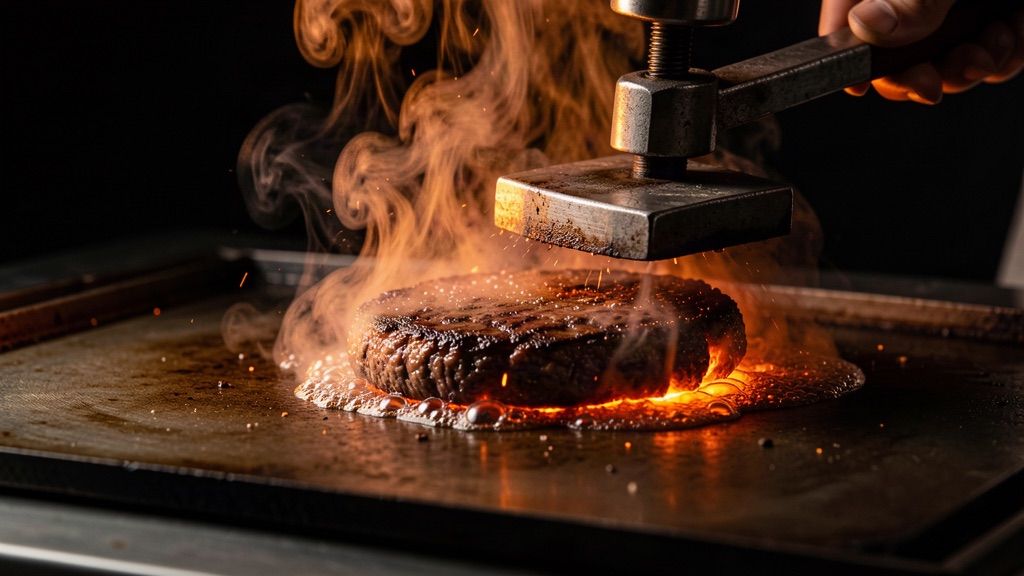
Pressed once, hard
Thirty seconds under a heavy steel press at 450°F. One press only — a second one squeezes out everything worth keeping and leaves you with a hockey puck.
Scraped, not flipped
A stiff spatula goes under the whole patty and lifts the crust off the griddle intact. Flipping with a soft turner leaves the best part welded to the steel.
Cheese on contact
American, laid on the second the patty turns, so it melts down into the crust rather than sitting on top of it. Real emulsifiers, real melt, no substitutes.
Why It Tastes Different
Three decisions most kitchens skip, because each one costs time or money.
The griddle never drops
We cook in small batches so the flat-top stays at temperature. Crowding the steel is the fastest way to steam a burger instead of searing it — so we'd rather make you wait four minutes.
Buns toasted in beef fat
Brioche face-down on the same surface the patties just left. It seals the crumb so the bun holds together to the last bite, and it tastes like the burger instead of like bread.
Sauce made in-house
Apex sauce is mixed daily — nothing shipped in a jug. Sharp, a little smoky, built to cut the richness of a double rather than pile more on.